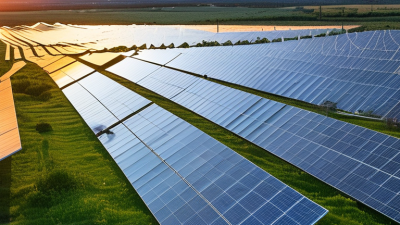
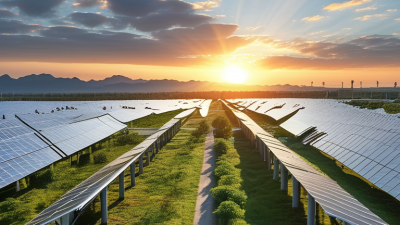
Choosing solar panel energy for global sourcing is not simply a response to rising electricity prices. It is a procurement decision shaped by energy demand, supplier capability, transport conditions, and long-term performance.
For many businesses, solar panels can reduce dependence on volatile grid prices and support measurable emissions goals. A warehouse roof, factory yard, or distribution center may become a productive energy asset. However, results depend on local sunlight, installation quality, system design, and maintenance planning. The answer is not automatically yes. That assumption is incomplete.
Experienced sourcing teams examine more than the quoted panel price. They review product specifications, factory records, quality-control procedures, warranty terms, and after-sales support. Independent testing and recognized technical standards can provide useful evidence, but paperwork alone is not enough. A reliable supplier should explain cell technology, degradation rates, temperature performance, packaging methods, and expected delivery schedules clearly.
Traceability matters. A procurement manager should know where components originate, how products are inspected, and how damaged units are handled during international shipping. Sample testing, factory audits, and documented acceptance criteria can reduce expensive surprises. Even then, risks remain. Currency changes, port delays, inconsistent communication, and changing regional requirements may affect the final project.
Solar panel energy offers meaningful potential for organizations seeking resilient and cleaner power. Yet responsible global sourcing requires patience, technical verification, and realistic financial modeling. The strongest decision balances energy yield, lifecycle cost, supplier transparency, and local operating conditions. Cheap is not always efficient. Better evidence usually leads to better sourcing outcomes.
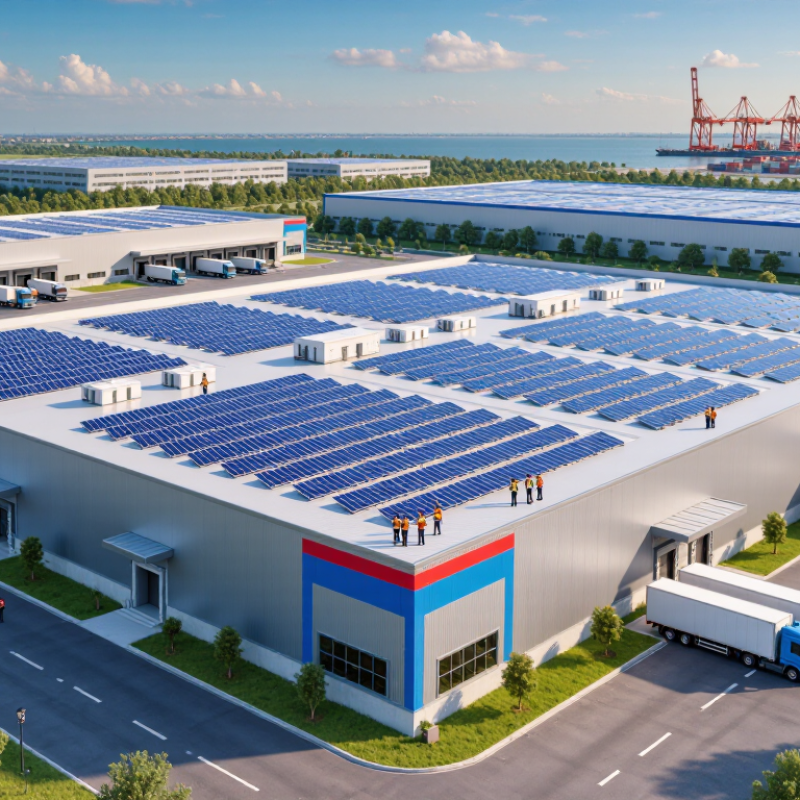
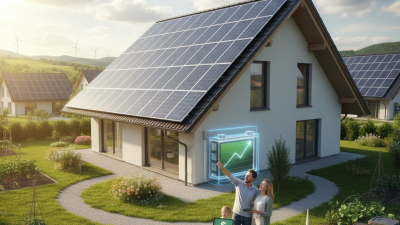
Solar panel energy comes from sunlight converted into electricity by photovoltaic cells.
These cells usually contain semiconductor materials that release electrons when struck by photons. The movement of these electrons creates direct current, or DC electricity. It is a quiet process, but not a simple one.
An inverter changes DC electricity into alternating current, which most buildings can use. A home may send extra power to a battery or the local grid.
Cloud cover reduces output, while dust, heat, and shading can reduce it further. A clean panel at noon may still produce less energy than its rated capacity.
Real conditions are messier.
For global sourcing, buyers should examine cell technology, measured efficiency, temperature performance, and product testing records. Clear documentation matters as much as the panel itself.
During a practical site inspection, even a small shadow from a railing can affect several cells. This detail is easy to miss.
I have also found that advertised performance can feel more certain than actual field results. Specifications need independent verification, not blind trust.
Transport packaging, warranty terms, and installation guidance also influence long-term value. A reliable sourcing decision compares laboratory data with the climate, roof design, and maintenance skills available at the destination.
Solar panel energy matters for global sourcing because it connects procurement with measurable energy and climate goals. IRENA’s Renewable Capacity Statistics 2024 reported about 346 GW of new solar capacity worldwide in 2023. That growth changes supplier expectations. Buyers now examine module efficiency, degradation rates, inverter compatibility, and documented manufacturing quality. A reliable sourcing process also checks certificates, factory audits, delivery records, and warranty terms. These details matter when panels face salt air, dust, snow, or intense heat.
The commercial case is practical. Solar electricity can reduce exposure to volatile fuel prices and support more predictable operating costs. The IEA PVPS Trends 2024 report estimated global photovoltaic capacity exceeded 1.6 terawatts after strong 2023 growth. Yet sourcing is not automatically sustainable. Transport distance, aluminum use, polysilicon production, packaging, and end-of-life recovery still require scrutiny. The case is not flawless.
In real procurement work, a cheaper panel may create higher replacement costs after several years. A slightly higher upfront price can make sense when testing data, traceability, and technical support are stronger. Buyers should compare total ownership cost, not only the quoted unit price. They should also request verified performance data under realistic temperatures. Laboratory results can look impressive. Field conditions are less forgiving. Complementary storage may be necessary where grids are unstable, adding cost and design complexity. This tension deserves honest review before signing a global supply agreement.
Global solar PV capacity and annual additions, 2010–2024
Global solar photovoltaic capacity expanded from approximately 40 GW in 2010 to about 1,865 GW in 2024. Annual additions also increased substantially, indicating a rapidly growing international supply ecosystem and broader access to solar energy for global sourcing strategies. Data: IRENA Renewable Capacity Statistics 2025.
Global solar procurement is expanding quickly. The IEA PVPS Trends 2024 report recorded about 456 GW of new photovoltaic capacity in 2023. This growth increases supplier choice, but it also increases quality variation. A low quotation means little without verified production controls.
Evaluate the supplier’s factory, not only its brochure. Request recent IEC 61215 and IEC 61730 test evidence, production-line photographs, and an auditable bill of materials. Check whether each module receives electroluminescence imaging, IV testing, insulation testing, and visual inspection. Ask for serial-number traceability from wafer batches to shipping pallets. The International Energy Agency highlights quality assurance and durability as critical factors in reducing lifetime project costs.
Independent testing should challenge the supplier’s claims. Review third-party results for potential-induced degradation, damp heat, thermal cycling, hail, and mechanical loading. The National Renewable Energy Laboratory has reported typical module degradation near 0.5% annually, although real projects can perform differently. Compare the warranty language with measured evidence, including exclusions, replacement procedures, and response times. A certificate alone is not proof.
Supplier reliability also depends on communication. Request sample inspection records, corrective-action reports, and shipment history. Visit the factory when project value justifies it. Small details matter, such as damaged corner protectors or inconsistent pallet labels. No checklist is perfect. Some buyers still overvalue price and underestimate field failures, which may become expensive after installation access disappears.
Solar sourcing looks attractive because technology costs have fallen sharply. IRENA’s Renewable Power Generation Costs 2023 reports a 12% decline in utility-scale solar costs during 2023. Since 2010, costs have dropped by about 90%. The IEA PVPS Trends in Photovoltaic Applications 2024 report also recorded more than 400 GW of new photovoltaic capacity in 2023. However, low factory prices do not equal low landed costs. Freight, insurance, currency changes, inspection fees, and port delays can quickly change the calculation.
Regulations create another layer of risk. Importers should check tariff classifications, product safety certificates, electrical standards, and grid-connection rules before signing contracts. Anti-dumping duties, countervailing measures, and local-content requirements may apply in selected markets. Supply-chain due diligence is also expanding, especially for labor practices and material traceability. Requirements differ by destination. A certificate accepted in one country may fail in another. That mistake is expensive. My practical experience suggests that buyers often compare module prices too early. The better comparison is total delivered cost, measured per usable watt.
Tips: Request a complete landed-cost model from suppliers. Include customs duty, testing, inland transport, warranty handling, and recycling obligations. Verify each certificate with the relevant authority. Keep written evidence for origin and factory audits. Leave contingency funding for policy changes. Forecasts can be wrong. A careful sourcing plan should admit that uncertainty.
Why Choose Solar Panel Energy for Global Sourcing?
How to Build a Reliable Global Solar Panel Supply Chain
A reliable global solar panel supply chain begins with evidence, not attractive quotations. Buyers should verify factory capacity, quality records, financial stability, and export experience before signing contracts. Independent audits can inspect cell efficiency, lamination controls, worker safety, and production traceability. Small details matter. A missing serial-number link can complicate warranty decisions years later.
Technical requirements should be written in measurable terms. Specify power tolerance, temperature coefficients, mechanical-load ratings, packaging standards, and required certifications. Testing should reference recognized standards, including IEC 61215 and IEC 61730, where applicable. Use pre-shipment sampling and independent laboratory checks for larger orders. Yet paperwork is not proof. Random cartons still need inspection for broken glass, moisture, connector damage, and label errors. This step is easy to reduce when schedules tighten, which is a costly mistake.
Logistics planning needs more than a freight quote. Map ports, seasonal weather, insurance, customs documents, and inland delivery risks. Keep qualified secondary suppliers, but validate materials and process consistency before switching. Track shipment impact indicators when the route demands them. Payment milestones can connect money to inspection results and accepted documentation. Still, no sourcing plan is perfect. A supplier may pass one audit and weaken controls later. Regular requalification, transparent incident reporting, and realistic lead times help expose that gap.
| Data Dimension | Global Benchmark or Fact | Supply Chain Relevance | Recommended Procurement Check | Reference |
|---|---|---|---|---|
| Global Solar PV Capacity | Approximately 1,419 GW installed worldwide at the end of 2023 | A large installed base supports global technical know-how, maintenance capabilities, component availability, and a mature project ecosystem. | Compare supplier capacity, production history, installation references, and after-sales service coverage in the target market. | IRENA, Renewable Capacity Statistics 2024 |
| Typical Commercial Module Efficiency | Approximately 20%–23% for currently available mainstream crystalline-silicon modules | Higher efficiency can reduce land use, mounting structure requirements, cabling, and installation labor per megawatt. | Verify efficiency under standard test conditions and compare the temperature coefficient, operating conditions, and measurement tolerance. | IEA PVPS and NREL photovoltaic technology assessments |
| Module Power Rating | Common utility-scale modules generally range from approximately 400 W to 700 W | Higher-wattage modules may reduce the number of modules, connectors, foundations, and installation operations required for a project. | Evaluate total system cost rather than module wattage alone, including transport dimensions, mounting compatibility, and replacement availability. | NREL Best Research-Cell and Module Efficiency Chart; IEC product documentation practices |
| Annual Power Degradation | A commonly specified maximum is about 0.5% per year after the first year, depending on product technology and warranty terms | Lower degradation improves long-term energy yield and strengthens the predictability of project cash flow. | Request a product-specific linear performance warranty, first-year degradation limit, test method, and warranty claim procedure. | IEC 61215-based product qualification and industry performance-warranty practices |
| Product and Performance Warranty Period | Product warranties commonly cover approximately 12–25 years; performance warranties commonly extend to 25–30 years | Longer coverage can reduce lifecycle risk, but warranty value depends on the issuer’s financial strength and enforceability. | Check governing law, claim jurisdiction, transferability, response times, spare-part obligations, and independent insurance or escrow arrangements. | International PV procurement and warranty practices; contract terms must be verified per supplier |
| International Product Testing | IEC 61215 addresses design qualification and type approval; IEC 61730 addresses photovoltaic module safety qualification | Standardized testing improves comparability between suppliers and reduces technical and electrical safety uncertainty. | Request valid test reports, factory quality records, serial-number traceability, and confirmation that the tested construction matches the supplied product. | International Electrotechnical Commission, IEC 61215 and IEC 61730 |
| Common Solar Cell Technologies | Crystalline silicon remains the dominant commercial technology; tunnel oxide passivated contact and heterojunction designs are widely used advanced variants | Technology selection influences efficiency, temperature behavior, degradation, production capacity, and long-term spare-module compatibility. | Assess bill of materials, cell technology, temperature coefficient, mechanical load rating, and availability of matching replacement modules. | IEA PVPS Trends in Photovoltaic Applications and NREL technology analyses |
| 40-Foot High-Cube Container Capacity | Internal volume is approximately 76 m³; practical payload is commonly around 26–28 metric tonnes, subject to container and route limits | Container utilization directly affects landed cost, handling risk, delivery planning, and carbon emissions per unit shipped. | Confirm packed dimensions, gross weight, pallet configuration, maximum road weight, loading photos, and container-securing procedures. | ISO freight-container specifications and carrier loading limits; route-specific confirmation required |
| Quality-Control Sampling | Independent pre-shipment inspection is commonly performed on a statistically selected sample; sampling plans should be contractually defined | Sampling can identify visual defects, power deviations, packaging damage, and documentation inconsistencies before shipment. | Specify the acceptance quality limit, sample size, electroluminescence testing, flash testing, insulation testing, and rejection rights. | ISO 2859-1 sampling principles and international PV inspection practices |
| Traceability Requirement | Each module should have a unique serial number linked to production records, test results, materials, and shipment documentation | Traceability supports recalls, warranty claims, quality investigations, inventory control, and counterfeit prevention. | Require serial-number databases, tamper-resistant labels, packing-list reconciliation, digital certificates, and retention of production records. | IEC quality-management practices and solar PV supply-chain traceability guidance |
| Supplier Qualification Lead Time | A robust qualification process typically requires several weeks to several months, depending on testing, audits, samples, and contract complexity | Early qualification reduces the risk of selecting a supplier that cannot meet volume, quality, compliance, or delivery requirements. | Use a staged process covering document review, factory audit, sample testing, pilot order, production inspection, and periodic requalification. | International procurement quality-management practice; timing varies by project scope |
| Supply-Chain Diversification | A multi-source strategy can include at least two qualified supply regions or production sites for critical components | Diversification reduces exposure to port disruption, trade restrictions, extreme weather, production outages, and single-source failure. | Map raw-material, cell, module, glass, frame, inverter, and logistics dependencies; define approved alternatives before a disruption occurs. | IEA, Global Supply Chains of EV Batteries and Solar PV; supply-risk management principles |
| Incoterms and Landed-Cost Control | Incoterms 2020 define responsibilities for transport, insurance, delivery, and risk transfer, but do not determine product quality or ownership terms | Clear delivery terms prevent unexpected freight, customs, insurance, demurrage, and inland-transport costs. | State the exact Incoterm and named place, customs responsibilities, inspection rights, insurance coverage, delivery milestones, and delay remedies. | International Chamber of Commerce, Incoterms 2020 |