China has become a major source of home energy management system solutions for modern households. Manufacturers now serve apartments, villas, offices, and small commercial buildings. Their products can connect solar panels, batteries, smart meters, heat pumps, and electric vehicle chargers.
This guide examines leading Chinese manufacturers through practical and technical criteria. It considers product reliability, certification practices, software stability, installation support, and long-term service. A strong system should display energy flows clearly, like showing solar production, battery levels, and evening consumption on one screen. It should also respond safely when grid prices change or backup power is needed.
Not every impressive specification proves real quality. That matters.
The evaluation also considers manufacturing experience, research capabilities, platform compatibility, and customer feedback from different markets. Reliable suppliers usually provide clear documentation, firmware updates, warranty terms, and responsive technical assistance. Their systems should support secure data handling and comply with applicable regional requirements.
Some manufacturers may appear highly competitive, yet their after-sales networks remain limited outside China. Others offer excellent hardware but less mature software. Buyers should examine these weaknesses carefully. A product can perform well in a demonstration and still disappoint during winter demand peaks.
This overview is designed for distributors, installers, property developers, and homeowners comparing Chinese suppliers. It does not treat company rankings as permanent. Market conditions change, and product quality can vary between model generations. Careful verification remains essential before selecting a long-term home energy management system partner.
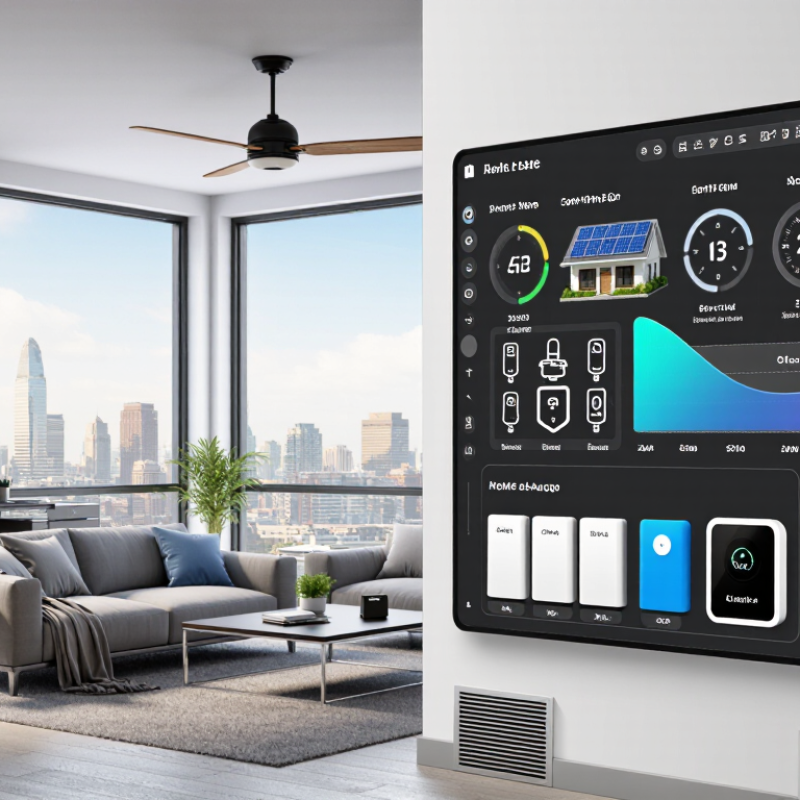
A Home Energy Management System, or HEMS, is a digital control layer for household energy. It connects meters, solar equipment, batteries, heating systems, appliances, and electric vehicle chargers. The system collects real-time data, then helps residents monitor consumption and adjust demand.
This matters because buildings consume 30% of global final energy, according to the International Energy Agency’s Energy Efficiency 2023 report. They also create nearly 26% of energy-related emissions. A HEMS can respond to electricity prices, solar production, and peak-demand signals. For example, it may heat water at noon when rooftop generation is strong. It may delay vehicle charging until overnight prices fall.
The U.S. Department of Energy describes grid-interactive buildings as systems that coordinate efficiency, distributed energy, and flexible demand. In practice, reliable performance depends on accurate sensors and compatible devices. A faulty temperature reading can trigger unnecessary heating. That is not intelligent management.
Good systems provide clear dashboards, automated scheduling, alerts, and manual overrides. They should also protect household data and remain usable during internet interruptions. The technology can reduce waste, but savings vary with climate, tariffs, building insulation, and user behavior. IEA analysis repeatedly emphasizes that efficiency gains require both technology and informed operation. The human factor remains difficult. A perfectly designed schedule may fail when family routines change.
China’s home energy management system manufacturing industry is organized as a layered supply chain, not a single factory category. Sensor makers, inverter producers, battery suppliers, gateway developers, and cloud software teams often work together. Some manufacturers focus on OEM production, while others provide system integration and installation support.
Manufacturing clusters usually connect electronics assembly with testing laboratories and logistics providers. This structure helps companies build smart meters, load controllers, energy gateways, and monitoring platforms at different price levels. Experienced suppliers also test communication stability, temperature resistance, and cybersecurity before shipment. However, product quality can vary between batches. Factory audits and sample testing remain necessary. Technical documents are sometimes incomplete, which creates avoidable integration delays.
Tips: Ask for a clear system architecture, tested communication protocols, warranty terms, and service response times. Request performance data from similar residential projects. Check whether the supplier can support local grid rules and installation conditions. Do not judge capability from factory size alone. A smaller engineering team may understand field problems better, although its delivery capacity may be limited.
| Industry Segment | Typical HEMS Products | Main Chinese Manufacturing Clusters | Manufacturing and Integration Role | Common Communication Technologies | Common Compliance Requirements | Typical Customer or Sales Channel |
|---|---|---|---|---|---|---|
| HEMS Gateway and Controller Manufacturers | Residential energy gateways, home energy controllers, data concentrators, monitoring platforms and mobile applications | Guangdong, Shanghai, Zhejiang and Jiangsu | Coordinate solar generation, batteries, appliances, electric vehicles and grid signals through a central control layer | Wi-Fi, Ethernet, Bluetooth, Zigbee, Matter, Modbus TCP/RTU and cloud APIs | Electrical safety, radio-equipment, cybersecurity, privacy and market-specific EMC requirements | Energy solution providers, installers, utilities, real-estate projects and overseas distributors |
| Residential Solar and Storage System Integrators | Hybrid inverters, battery energy storage systems, energy meters, backup interfaces and integrated HEMS software | Guangdong, Jiangsu, Zhejiang and Anhui | Combine power-conversion equipment, batteries, protection devices and software into a complete household energy package | CAN, RS-485, Modbus, Ethernet, Wi-Fi and cloud-based monitoring protocols | IEC 62109 for power-converter safety, IEC 62619 for industrial lithium batteries, UN 38.3 for battery transport and applicable regional grid codes | Solar installers, electrical contractors, wholesalers, EPC companies and private-label importers |
| Smart Meter and Load-Sensing Device Manufacturers | Smart electricity meters, current transformers, power meters, circuit-level monitors, smart plugs and relay modules | Zhejiang, Jiangsu, Guangdong and Shandong | Provide the measurement layer required for consumption analysis, demand response, load scheduling and energy reporting | RS-485, Modbus RTU, Wi-Fi, Zigbee, Bluetooth and wired pulse interfaces | Metering accuracy, electrical safety, EMC, radio certification and local utility or national metrology rules | HEMS integrators, electrical distributors, building-automation companies and utility programs |
| Smart Appliance and HVAC Control Suppliers | Heat-pump controllers, thermostats, appliance gateways, smart relays, water-heater controls and demand-response interfaces | Guangdong, Zhejiang, Jiangsu and Shandong | Connect high-consumption household equipment to the HEMS so that loads can be shifted according to tariffs, solar output or grid conditions | Wi-Fi, Zigbee, Bluetooth, Matter, RS-485, Modbus and manufacturer cloud interfaces | Appliance safety, EMC, energy-efficiency labeling, radio certification and local building or electrical codes | Appliance OEMs, HVAC manufacturers, property developers, installers and smart-home distributors |
| Residential EV Charging and Energy-Orchestration Suppliers | AC wall boxes, load-balancing controllers, solar-aware charging systems and vehicle-to-home-ready hardware | Guangdong, Jiangsu, Zhejiang and Shanghai | Link home charging demand with household power limits, rooftop solar, batteries and time-of-use electricity tariffs | OCPP, Ethernet, Wi-Fi, 4G/5G, Modbus, CAN and ISO 15118-related interfaces where supported | IEC 61851, regional EV-charging safety rules, EMC, residual-current protection and grid-connection requirements | Charging-network operators, automotive suppliers, solar installers, fleet companies and home-energy distributors |
| Solar, Storage and HEMS Package Assemblers | Preconfigured home-energy kits containing photovoltaic equipment, batteries, inverters, meters, gateways and installation accessories | Pearl River Delta, Yangtze River Delta and Fujian | Reduce installation complexity by sourcing compatible components, configuring firmware and packaging systems for a target market | Modbus, CAN, RS-485, Ethernet, Wi-Fi and proprietary cloud integrations | Product-specific safety and EMC certifications, battery transport documentation, local grid approval and installer requirements | Overseas distributors, EPC contractors, regional installers and private-label energy companies |
| Electronics ODM and EMS Manufacturers | PCB assemblies, control boards, smart gateways, sensor modules, injection-molded enclosures and firmware production | Shenzhen, Dongguan, Suzhou, Ningbo and other electronics manufacturing centers | Manufacture products to another company’s design or jointly develop hardware, embedded software, testing procedures and packaging | Interfaces are selected according to the client design, commonly including Wi-Fi, Bluetooth, Zigbee, Ethernet, RS-485 and CAN | ISO 9001, ISO 14001, RoHS, REACH, EMC and destination-market product certifications | Energy brands, appliance companies, utilities, system integrators and technology start-ups |
| Export-Oriented Private-Label HEMS Suppliers | White-label gateways, monitoring applications, smart meters, energy dashboards and bundled residential energy systems | Guangdong, Zhejiang, Jiangsu and Fujian | Adapt hardware, software language, packaging, documentation and certification files for different export markets | Wi-Fi, Ethernet, cellular connectivity, Modbus, MQTT, OCPP and cloud-to-cloud APIs | CE, UKCA, FCC, RCM, RoHS, RED and other destination-specific certifications, depending on the product category | Importers, distributors, installers, online channels and regional energy-service companies |
| Industrialized Contract Manufacturing and Testing Services | Assembly, calibration, aging tests, firmware flashing, functional testing, packaging and after-sales replacement units | Guangdong, Jiangsu, Zhejiang and Sichuan | Support scalable production after product design is completed, with quality-control systems for traceability and batch consistency | Factory-test interfaces, automated test equipment, serial-number systems and cloud-based production databases | ISO 9001 quality management, environmental controls, incoming-material inspection and customer-specific audit requirements | Established HEMS developers, inverter suppliers, appliance manufacturers and international procurement teams |
China’s leading home energy management system manufacturers increasingly combine smart meters, solar inverters, batteries, and flexible loads. Their systems collect data through gateways, then use cloud platforms to track household consumption in near real time. Local edge computing can keep essential controls working during weak internet connections. That detail matters in rural homes and high-density apartment buildings.
Artificial intelligence helps forecast solar production, electricity demand, and battery availability. Time-of-use algorithms can shift water heating or electric vehicle charging toward cheaper periods. Some platforms also support demand response through secure communication protocols and encrypted user accounts. Reliable products should provide clear energy records, firmware updates, and protection against abnormal voltage. Field testing still matters. A dashboard may look impressive but offer limited value when sensor readings drift. Independent certification and documented testing therefore deserve careful attention.
Tips: Ask whether the system supports your local grid rules and meter type. Check battery compatibility before installation. Review data ownership and remote-access settings. Request a backup-power test, not only a software demonstration. Installers should explain alarm codes in plain language. A small pilot installation can reveal communication delays, inaccurate readings, or inconvenient controls before wider deployment.
The chart compares common technical layers used in residential home energy management systems. Values represent typical control or data-update intervals supported by industry-standard HEMS architectures, rather than company or brand performance data.
Evaluating China’s top home energy management system manufacturers requires more than comparing product prices. Look for proven experience in residential projects, not only polished demonstrations. Ask how many systems are operating in homes with solar panels, batteries, heat pumps, or electric vehicles. Request installation records, fault reports, and customer references from similar climates.
Technical capability matters every day. Examine whether the HEMS supports open communication standards and works with equipment from different suppliers. Check response times during power outages, data accuracy, remote updates, and local control when the internet fails. A practical test should include a smart meter, battery, and high-load appliance. Watch the dashboard during a simulated peak-demand event. Does it react clearly?
Security deserves equal attention. Confirm encryption, access controls, software maintenance, and data ownership terms. Review quality certifications and the manufacturer’s testing procedures, rather than accepting a certificate image without verification. Factory visits can reveal assembly discipline, component traceability, and spare-parts planning. Still, no audit is perfect. A clean showroom may hide weak after-sales support. Ask who answers technical calls at midnight and how quickly replacement parts arrive. Warranty length also needs context; coverage exclusions may matter more than the headline number. A small pilot project is wise, although it can produce unusually positive results. Keep measuring performance after installation, because real households behave less predictably than test laboratories.
Chinese home energy management system manufacturers increasingly design HEMS platforms for apartments, villas, and small commercial buildings. Typical applications include photovoltaic coordination, battery scheduling, electric vehicle charging, and heat-pump control. In a pilot home, the system may combine a rooftop inverter, a 10 kWh battery, smart meters, and controllable sockets. It can shift water heating to midday, when solar output is strongest. Results depend heavily on local tariffs and household habits.
Standards require careful checking. Electrical safety may involve IEC 60335-1, IEC 62477-1, and relevant national requirements. Communication commonly uses Modbus, MQTT, Wi-Fi, or emerging smart-home protocols. Cybersecurity deserves equal attention. Secure updates, unique passwords, encrypted data, and access logs should be documented before shipment. A polished dashboard is not enough.
Export preparation involves more than translating the app. Manufacturers should confirm grid-code compatibility, radio approvals, electromagnetic compatibility, energy labeling, recycling duties, and privacy rules in the target market. Requirements may differ between Europe, North America, and Southeast Asia. Product files should include test reports, wiring diagrams, user manuals, and declarations of conformity. Customs data must match the actual device configuration. This is often overlooked. Field experience also shows that cloud dependence can create support problems after installation. Local control, offline operation, and spare communication modules make the system more resilient, although they increase development costs. Some claims still need independent verification, especially savings estimates based on ideal weather.