2026 Best Eco Energy Solutions for Global Buyers?
As the world confronts climate change, the demand for eco energy solutions grows. Experts in the field emphasize that innovation is key. Dr. Emily Chen, a leading authority on renewable energy, states, “Sustainable solutions must be accessible and efficient.” This aligns perfectly with the increasing aspirations of global buyers.
In 2026, stakeholders will look for eco energy solutions that not only reduce carbon footprints but also provide economic benefits. Markets are evolving. Companies holding onto outdated methods may fall behind. Integration of technology, efficiency, and affordability is crucial. Buyers should be aware of the diverse options available.
While many solutions emerge, some may lack scalability or reliability. Not every product meets high standards. It is vital for buyers to conduct thorough research. Understanding the criteria of effective eco energy solutions is essential for making informed decisions. The focus must be on creating a greener planet while ensuring cost-effectiveness.

Emerging Trends in Eco Energy Solutions for 2026
Emerging trends in eco energy solutions are shaping the industry's future. A recent report from the International Renewable Energy Agency (IRENA) highlights that global renewable energy capacity is expected to exceed 5 terawatts by 2026. This growth reflects a shift towards sustainable practices. Countries are adopting solar, wind, and hydropower as core components of their energy strategies.
Energy storage technologies are gaining traction. According to BloombergNEF, the global energy storage market is projected to reach $620 billion by 2026. This growth is driven by enhancements in battery technology and grid integration. However, affordability remains a barrier for widespread adoption in developing regions. Addressing these disparities is crucial for a sustainable energy future.
Innovation in smart grids is another notable trend. Smart grids enhance efficiency and reliability through advanced communication technologies. A report from McKinsey suggests that smart grid investments could save up to $200 billion annually by 2026. Despite these advancements, integrating legacy systems poses significant challenges. Stakeholders must reflect on these complexities to ensure broader acceptance and implementation of eco energy solutions.
Top Global Suppliers of Sustainable Energy Technologies
In recent years, the sustainable energy sector has gained significant momentum. According to the International Energy Agency, investments in renewable energy technologies reached a record high of $500 billion in 2022. This surge reflects a growing global demand for eco-friendly solutions. The need for energy is increasing, but so is the awareness of environmental impact.
Leading suppliers are stepping up to meet this demand. Many companies now focus on solar, wind, and battery technologies. A recent report by BloombergNEF indicates that solar power alone could account for 60% of global electricity generation by 2030. This is a notable shift from fossil fuels, which have long dominated the energy landscape. However, challenges remain.
Supply chain disruptions and technology costs require ongoing attention. Investors and policymakers are recognizing the need for innovation. Collaborations are forming between startups and established firms. This trend fosters creativity in developing new energy solutions. Yet, not all initiatives succeed. Some projects face regulatory hurdles or lack funding.
It’s essential to evaluate failures to refine strategies and enhance future efforts. As the demand for sustainable energy grows, the focus should remain on innovation, collaboration, and transparency in the sector.
Innovative Renewable Energy Sources Gaining Popularity
The world is increasingly focusing on innovative renewable energy sources. These alternatives offer a sustainable solution to combat climate change. Solar panels and wind turbines dominate discussions, but other options are emerging as well. Biomass energy is gaining traction as communities seek to convert organic waste into power. This method reduces landfill waste while providing energy.
Geothermal energy is another exciting avenue. It taps into the Earth’s internal heat, providing a consistent energy source. However, the initial setup can be expensive and requires careful site selection. Additionally, hydropower, while historically significant, faces challenges like ecological disruption and changing weather patterns. These factors often raise concerns about its sustainability.
Energy storage solutions are crucial as demand for renewables grows. Batteries are essential, yet questions about materials and recycling persist. Innovative approaches, such as hydrogen fuel cells, show promise but require further research. While the path to a fully sustainable energy future is fraught with complexities, the progress made in innovative renewable sources is encouraging.
2026 Best Eco Energy Solutions for Global Buyers
| Energy Source |
Description |
Advantages |
Trending Regions |
| Solar Energy |
Harnessing sunlight using photovoltaic cells. |
Cost-effective, abundant, and low environmental impact. |
North America, Europe, Asia |
| Wind Energy |
Utilizing wind turbines to generate electricity. |
Renewable, scalable, and sustainable. |
Europe, North America |
| Hydropower |
Generating electricity from flowing water. |
Reliable, efficient and can store energy. |
Asia, South America |
| Geothermal Energy |
Using heat from the Earth’s interior. |
Low emissions and a constant energy source. |
Iceland, USA, Philippines |
| Biomass Energy |
Using organic materials to produce energy. |
Reduces waste and carbon footprint. |
North America, Europe |
Assessment of Eco-Friendly Energy Products for Consumers
The shift toward eco-friendly energy solutions is crucial in today’s climate crisis. A recent report by the International Energy Agency (IEA) indicates that renewable energy sources could provide up to 80% of the world’s energy supply by 2050. This significant potential influences consumer choices and drives innovation in sustainable products. Solar panels and wind turbines are among the top choices for environmentally responsible consumers. According to the Global Renewable Energy Policy Network, investments in these technologies have surged by 30% in the last year alone.
However, challenges remain in the eco-friendly product market. Not all consumers are aware of the benefits of these energy solutions. A survey revealed that 47% of consumers see cost as a barrier to adopting renewable energy products. This indicates a pressing need for better awareness campaigns. Furthermore, while products like energy-efficient appliances and solar energy systems are promising, the recycling and disposal of these technologies pose sustainability questions. A report from the United Nations suggests that potential waste from solar panels could reach 78 million tons by 2050 if not properly managed.
Shifting towards greener energy options necessitates consumer education about both the benefits and drawbacks. It involves understanding how to navigate the market, from energy savings to environmental impact. As we approach 2026, the importance of informed consumer choices becomes evident. It is essential to evaluate products critically and consider their long-term sustainability.
2026 Best Eco Energy Solutions for Global Buyers
Future Challenges and Opportunities in Eco Energy Markets
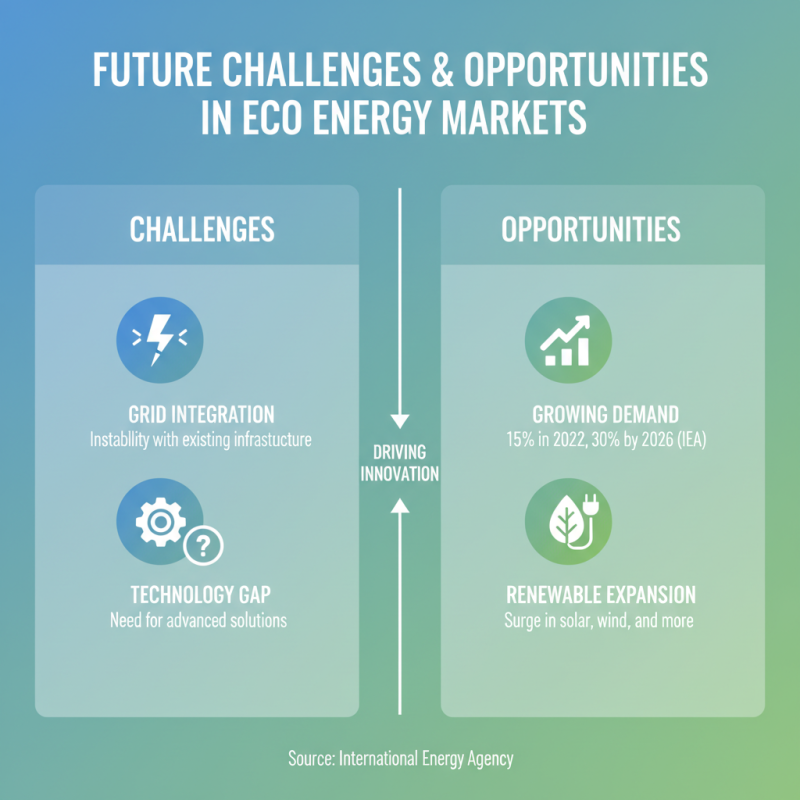
The eco energy market faces significant challenges as it grows. Demand for renewable sources surged by 15% in 2022, with a projected increase of 30% by 2026 according to the International Energy Agency. However, obstacles remain. For instance, many countries struggle with integrating renewable energy into existing grids. Grid instability can hamper progress, underscoring a need for advanced technology solutions.
Investment in energy storage is a key opportunity. The global energy storage market is expected to reach USD 426 billion by 2027. This presents a chance for innovators to develop efficient, sustainable systems. Yet, the reliance on raw materials for batteries raises concerns about environmental impacts. Sustainable sourcing practices are imperative to mitigate these issues.
Policy changes will also shape the landscape. Governments are prioritizing green initiatives to combat climate change. Increased regulatory support could accelerate market growth, but inconsistent policies may create unpredictability. Stakeholders must navigate these uncertainties to seize emerging opportunities while addressing inherent risks. Timely integration of innovations and compliance with evolving policies will be crucial for success in the eco energy sector.