
Why Choose China DC EV Chargers for Global Projects?
Why Choose China Dc Ev Chargers for Global Projects?
Global electric mobility is moving from pilot programs to everyday infrastructure. The International Energy Agency’s Global EV Outlook 2024 reported more than 14 million electric cars sold worldwide in 2023. Public charging infrastructure also expanded rapidly, with the global stock exceeding four million chargers. This growth creates a practical question: can hardware remain reliable across different climates, grids, vehicles, and regulations?
A China Dc Ev Charger can offer strong manufacturing scale, competitive pricing, and broad product selection. Many established Chinese manufacturers support high-power outputs, liquid-cooled cables, CCS2, GB/T, and OCPP-based communication. These features matter at a busy highway site, where a charger may operate under heat, dust, rain, and repeated peak loads. The China Electric Vehicle Charging Infrastructure Promotion Alliance reported continued expansion of China’s charging network in 2024, demonstrating extensive deployment experience. Experience matters.
However, a low purchase price does not guarantee project success. Field evaluations should examine thermal performance, connector durability, payment integration, remote diagnostics, spare-parts access, and measured uptime. IEC standards and local electrical codes still govern installation and operation. They cannot be treated as optional paperwork.
The International Energy Agency also emphasizes that grid capacity and charging access remain uneven between regions. Therefore, global buyers should assess each site carefully, rather than copy a successful Chinese deployment unchanged. Some specifications may look impressive but perform differently in cold weather or unstable grids. That is an important limitation. With factory audits, independent testing, localized service, and transparent warranty terms, China DC EV chargers can become a dependable component of international charging projects.
What Are China DC EV Chargers?
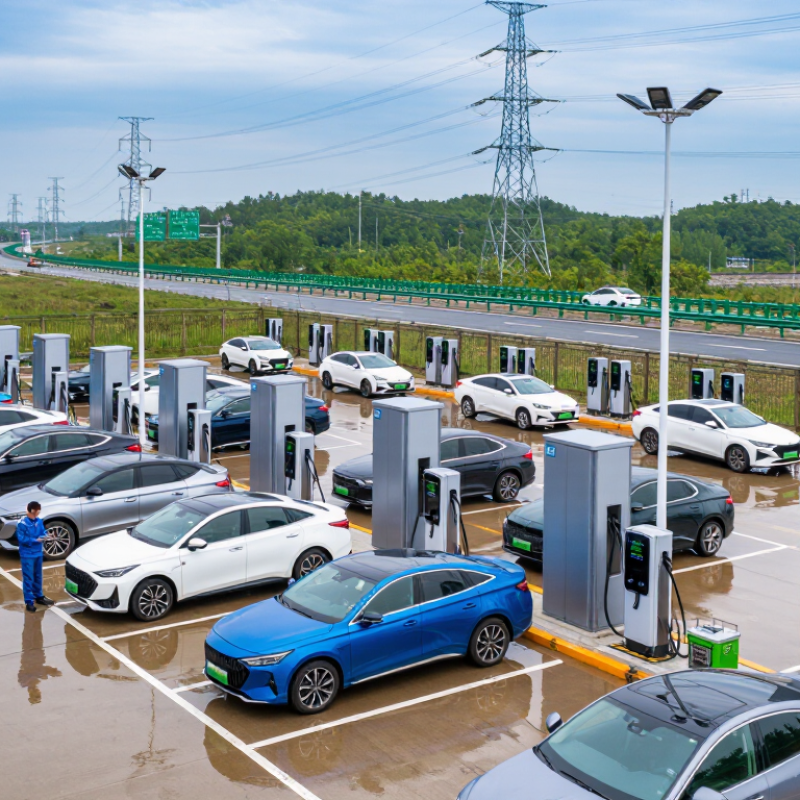
China DC EV chargers are high-power charging systems made in China for electric vehicles. They convert grid AC electricity into DC power inside the charging unit. This process sends energy directly to the vehicle battery, reducing charging time. Common output ranges include 30 kW, 60 kW, 120 kW, and higher. Many units support CCS or other regional charging standards. Selection must match local vehicles, grid capacity, climate, and payment requirements.
Tips: Check connector compatibility before ordering. Request test reports and installation drawings. Confirm protection ratings for dust, rain, and temperature. Ask about remote monitoring and software updates. A lower purchase price may hide higher maintenance costs.
In global projects, technical documents matter as much as hardware. Look for clear data on efficiency, voltage range, cooling design, emergency shutdown, and communication protocols. Field experience shows that cable length can affect daily convenience. A heavy cable beside a busy parking bay becomes frustrating quickly. Reliable suppliers should provide factory inspection records, warranty terms, spare-part guidance, and responsive technical support. Independent certification can improve confidence, but it does not replace on-site testing. A charger may look excellent on paper and still perform poorly after installation. Grid fluctuations, weak networking, or unclear maintenance duties can create delays. Careful pilot testing is still necessary.
Why Choose China DC EV Chargers for Global Projects? – What Are China DC EV Chargers?
China DC EV chargers are direct-current charging systems that convert AC power into controlled DC power within the charging cabinet, allowing electricity to be delivered directly to an electric vehicle’s battery. The following table summarizes common technical characteristics and project considerations for global deployments.
| Data Dimension | Typical Specification or Range | Practical Meaning for Global Projects |
|---|---|---|
| Charging Type | DC fast charging; off-board AC-to-DC power conversion | Higher charging power can be supplied directly to the vehicle battery, generally reducing charging time compared with standard AC charging. |
| Common Rated Power | 20 kW–60 kW for compact systems; 80 kW–180 kW for high-power stations; 240 kW and above for selected heavy-duty or high-throughput applications | The appropriate rating depends on the site’s grid capacity, vehicle battery voltage, parking duration, traffic volume, and required charging throughput. |
| Output Voltage | Typically 200–1,000 V DC, depending on the charger design and vehicle compatibility | A wide voltage range supports many passenger cars, buses, commercial vehicles, and newer high-voltage vehicle platforms. |
| Maximum Output Current | Commonly 60–250 A; some high-power systems can reach approximately 500 A with suitable cooling and infrastructure | Higher current can increase charging power, but cable temperature, connector design, thermal management, and site safety requirements also become more important. |
| Input Supply | Usually three-phase AC, commonly 380–415 V at 50 Hz for many commercial installations; local grid requirements may differ | Electrical design must be adapted to the project country’s voltage, frequency, protection rules, transformer capacity, and utility-connection procedures. |
| Power Conversion Efficiency | Commonly about 94%–97% at or near rated operating conditions | Higher efficiency reduces electrical losses, operating costs, and heat generation. Actual efficiency varies with load level, temperature, and equipment design. |
| Charging Connector Options | CCS2, CCS1, CHAdeMO, GB/T, or other region-specific configurations | Connector selection must match local regulations, the target vehicle population, and the requirements of the charging-network operator. |
| Communication Standards | Vehicle communication commonly uses ISO 15118 or related standards; charger-network communication often uses OCPP 1.6J or OCPP 2.0.1 | Open communication standards can support backend integration, remote monitoring, payment services, diagnostics, load management, and future software upgrades. |
| Ingress Protection | Outdoor charging cabinets are commonly designed to IP54, IP55, or IP65 levels, depending on the enclosure and installation plan | Protection against dust and water is important for outdoor sites. The selected rating should be verified through the product documentation and local installation conditions. |
| Operating Temperature | Many outdoor models are designed for approximately −20°C to +50°C; optional heating or cooling may be required for extreme climates | Temperature range affects power availability, battery charging performance, cooling design, and maintenance planning in cold or hot regions. |
| Installation Formats | Wall-mounted, floor-mounted, pedestal-mounted, split cabinet, or charger-and-dispenser configurations | Different formats can be selected for parking lots, highway service areas, bus depots, fleet yards, shopping centers, and fuel-station conversions. |
| Typical Charging Time Example | A 120 kW charger may add approximately 36 kWh in about 18 minutes under ideal conditions; real charging commonly takes longer | Actual time depends on the vehicle’s maximum charging rate, battery state of charge, temperature, battery chemistry, charger power sharing, and charging curve. |
| Safety Functions | Overcurrent, overvoltage, short-circuit, residual-current, overtemperature, insulation, emergency-stop, and surge protection | Layered protection helps reduce electrical and thermal risks. Certification, testing, grounding, and installation quality remain essential for safe operation. |
| Energy Management | Dynamic power allocation, load balancing, scheduled charging, and optional photovoltaic or battery-storage integration | Energy-management functions can help limit peak demand, improve the utilization of the site connection, and coordinate charging with renewable generation. |
| Payment and User Access | RFID, mobile application, QR code, contactless payment, terminal payment, or backend authorization | Payment and access options should be selected according to local payment habits, data-protection rules, roaming requirements, and operator business models. |
| Global Project Adaptability | Configurable connector, software, communication, language, payment, and electrical parameters | Configuration flexibility can simplify deployment across different markets, but each project still requires local certification, grid approval, site engineering, and compliance verification. |
| Key Selection Criteria | Power rating, connector type, voltage range, network protocol, climate rating, protection level, certification, serviceability, and total cost of ownership | A suitable charger should be evaluated as part of the complete charging system rather than by purchase price alone. Installation, energy losses, maintenance, software, and spare parts also affect long-term value. |
Technical note: The figures shown are representative industry ranges rather than specifications for a particular company or brand. Final values should be confirmed against the selected equipment’s datasheet, applicable IEC or regional standards, utility requirements, and local certification rules.