How to Choose the Best Eco Energy Solutions for Your Business?
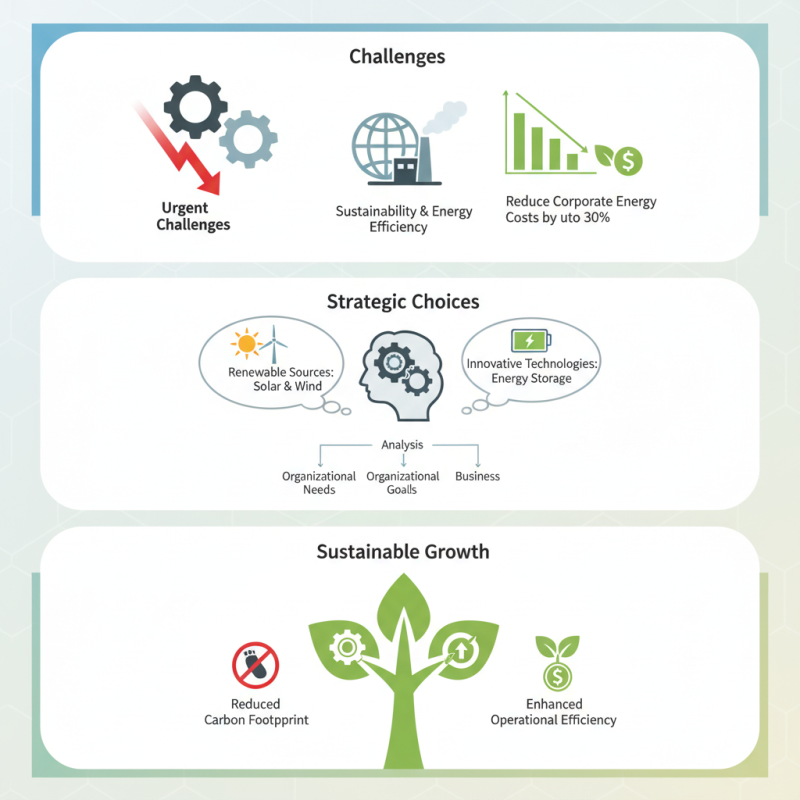
In today's competitive landscape, businesses face urgent challenges linked to sustainability and energy efficiency. A recent report from the International Energy Agency reveals that transitioning to eco energy solutions could reduce corporate energy costs by up to 30%. Selecting the right eco energy solutions is vital for any organization committed to reducing its carbon footprint and enhancing operational efficiency.
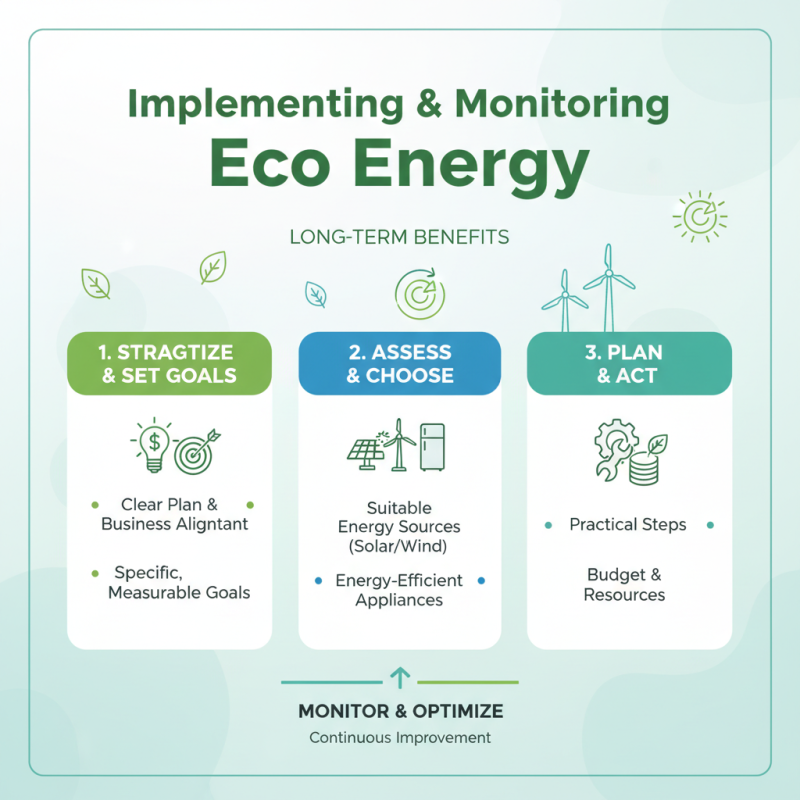
Experts suggest that these solutions can vary significantly in terms of effectiveness and feasibility. Dr. Emily Carter, a leading authority in sustainable energy, states, "Choosing the right eco energy solutions requires careful analysis and a clear understanding of your organization's needs." Her insights emphasize the importance of aligning energy strategies with business goals.
Reflecting on these considerations, many companies find it a challenge to optimize their energy usage. While some may gravitate towards renewable sources like solar and wind, others explore innovative technologies like energy storage advancements. This diversity in choices can lead to confusion. Ultimately, making informed decisions in the eco energy solutions space is essential for sustainable growth.
Understanding Your Business's Energy Needs and Consumption Patterns
Understanding your business's energy needs is crucial for selecting the right eco energy solutions. Studies show that around 30% of energy in commercial buildings is wasted. This waste can stem from inefficient systems or outdated equipment. By analyzing your consumption patterns, you can identify areas for improvement. Energy audits can reveal usage peaks and equipment inefficiencies, allowing for targeted solutions.
Furthermore, knowing the specific needs of your operation is vital. For instance, manufacturing businesses may have different energy demands compared to office environments. The U.S. Department of Energy emphasizes that tailoring eco-friendly solutions to your unique requirements can significantly enhance efficiency. Consider implementing smart meters to track and analyze real-time data. This step can help reduce unnecessary expenses and environmental impact.
While the data may seem overwhelming, it is important to reflect on your current practices. Are there areas where you could be using energy more wisely? Engaging employees in energy-saving initiatives can foster a culture of sustainability. Remember, small changes can lead to significant impacts over time, contributing to a greener future for your business.
Energy Consumption Patterns of Different Business Types
This chart illustrates the monthly energy consumption (in kWh) for various business types, helping you understand the specific energy needs that relate to your industry.
Evaluating Different Types of Eco Energy Solutions Available in the Market
Choosing the right eco energy solutions is crucial for any business aiming to improve sustainability. Various options exist, each with their benefits and challenges. Solar energy is popular. It's renewable and can significantly reduce electricity costs. However, the initial investment can be high, and location may affect efficiency. Businesses must assess their specific needs and resources before opting for solar.
Wind energy is another viable option. It is eco-friendly and generates power continuously in windy areas. Yet, installation and maintenance costs can be prohibitive for smaller businesses. Furthermore, not every business location is suitable for wind turbines. Therefore, companies must evaluate site conditions carefully.
Biomass solutions are gaining traction. They convert organic material into energy. This method can be sustainable and cost-effective. However, sourcing biomass can be inconsistent, raising concerns about reliability. Companies need to reflect on these limitations. Understanding the pros and cons of each solution can guide businesses towards eco energy solutions that align with their values and operational goals.
Analyzing Cost-Effectiveness and Return on Investment of Eco Solutions
When assessing eco energy solutions, cost-effectiveness is crucial. A 2021 report from the International Renewable Energy Agency (IRENA) highlighted that renewable energy technologies have decreased in cost by 80% over the past decade. This trend means that businesses adopting these technologies can significantly reduce long-term operational expenses. For instance, solar energy has become one of the cheapest sources of electricity, with many companies achieving payback periods of less than five years.
However, not all solutions guarantee immediate financial returns. Some eco initiatives might come with high initial investments. A detailed analysis from the National Renewable Energy Laboratory found that while energy efficiency upgrades can yield attractive returns, they often depend on specific characteristics of the business. Factors such as existing infrastructure and energy consumption patterns must be evaluated. Businesses might find themselves in a dilemma, weighing upfront costs against potential savings. This highlights the need for a comprehensive understanding of both the financial and environmental impacts before making a decision.
Careful consideration of these factors can lead to informed choices. Continuous monitoring and assessment are required to adapt strategies as technologies evolve and market dynamics shift. Ultimately, adopting eco energy solutions should be viewed as a long-term investment rather than a quick fix.
How to Choose the Best Eco Energy Solutions for Your Business? - Analyzing Cost-Effectiveness and Return on Investment of Eco Solutions
| Solution Type |
Initial Investment ($) |
Annual Savings ($) |
Payback Period (Years) |
ROI (%) |
| Solar Panels |
15,000 |
2,000 |
7.5 |
13.33 |
| LED Lighting |
8,000 |
1,200 |
6.67 |
15.00 |
| Wind Turbine |
50,000 |
5,000 |
10 |
10.00 |
| Geothermal Heating |
30,000 |
3,500 |
8.57 |
11.67 |
| Energy Management System |
12,000 |
1,800 |
6.67 |
15.00 |
Assessing Regulatory Compliance and Sustainability Certifications
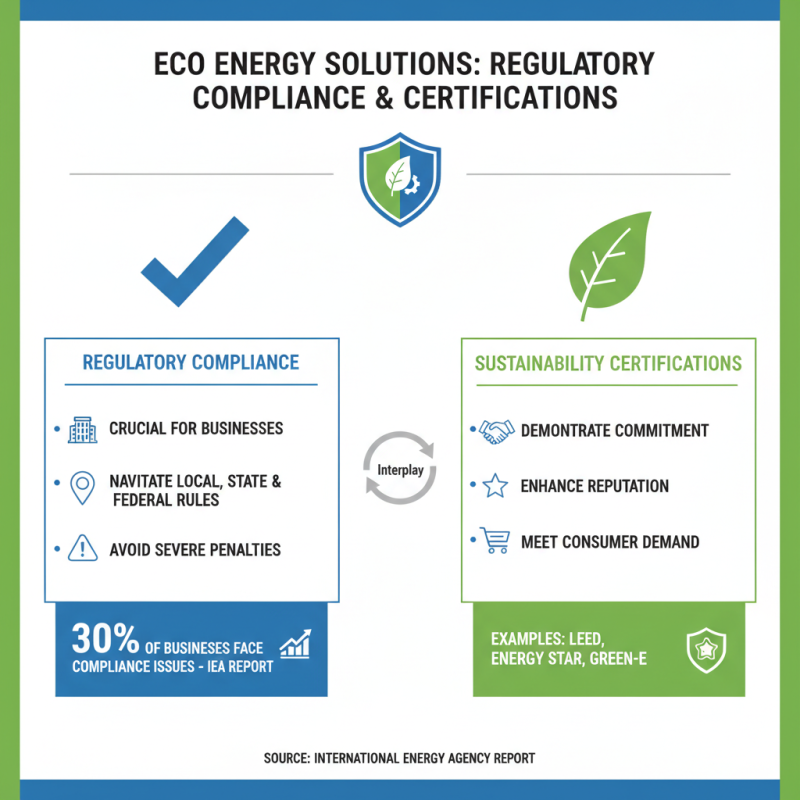
When selecting eco energy solutions, regulatory compliance is crucial. Businesses must understand local, state, and federal regulations. Non-compliance can lead to severe penalties. According to a report by the International Energy Agency, about 30% of businesses face compliance issues in their energy practices. This indicates a significant gap in understanding relevant regulations among companies.
Sustainability certifications are essential for credibility. They prove a company’s commitment to eco-friendly practices. The Global Reporting Initiative states that 70% of consumers prefer certified businesses. This highlights the importance of certifications like ISO 14001. However, many companies struggle to maintain these standards consistently. They often overlook the need for ongoing training and updates.
Eco energy decisions should align with a company's goals. A thorough analysis of sustainability certifications can guide this process. The market is dynamic, and what works today may not be sufficient tomorrow. Regular assessments are necessary to adapt to new standards. Awareness of potential challenges is a key part of developing an effective eco strategy.