Top China Best Solar Energy Solutions for Global Buyers?
In recent years, solar energy solutions have gained immense popularity globally. With the rise in demand, China has emerged as a leader in this sector. Expert Dr. Wang Lei, a renowned solar energy strategist, states, “Solar energy solutions will shape the future of sustainable development.” His insight highlights the innovative technologies and affordable options that Chinese manufacturers offer.
China's vast solar energy market provides global buyers with diverse solutions. From high-efficiency solar panels to advanced energy storage systems, the options are extensive. However, buyers should navigate through various products with care. Some solutions may not meet quality standards or long-term performance expectations. It is essential to research and assess potential suppliers thoroughly.
Furthermore, while the market offers competitive pricing, one must be cautious about durability and service. Not every solution labeled as high-tech fulfills its promises. Industry experts recommend exploring user reviews and seeking third-party assessments for reliability. The landscape of solar energy solutions is evolving, presenting opportunities and challenges must be addressed responsibly.
Top Solar Energy Solutions Offered by China for Global Market
China stands as a leading provider of solar energy solutions, playing a crucial role in the global market. The country's advancements in solar technology have made it possible to deliver high-quality materials at competitive prices. Solar panels produced in China are often praised for their efficiency and innovative designs. Many international buyers are increasingly turning to Chinese manufacturers for their energy needs.
One notable area of development is in solar energy storage systems. These systems allow consumers to store excess energy for later use. This innovation is vital for regions with inconsistent sunlight. Moreover, China has invested heavily in research to develop enhanced battery technologies. This focus ensures better performance and longevity.
Some challenges remain as the market evolves. Quality control can sometimes vary among manufacturers. Buyers should carefully assess their suppliers. Understanding the certifications and standards in place is essential. Collaboration with manufacturers for tailored solutions could yield significant benefits. As the global demand for renewable energy grows, China's role will undoubtedly expand, attracting more partnerships and innovations.
Key Technologies in Chinese Solar Panels: Efficiency and Innovation
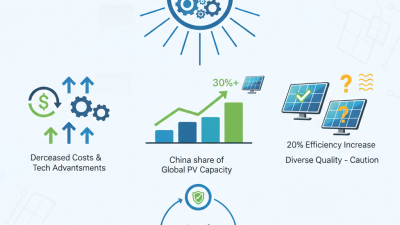
The solar energy landscape in China showcases remarkable technological advancements. Chinese solar panels are renowned for their high efficiency levels, often exceeding 20%. According to the International Renewable Energy Agency (IRENA), China's share of global solar panel production reached around 70% in 2022. This dominance stems from cutting-edge technologies that improve energy conversion rates and durability.
Performance is a key factor for buyers. Many panels use monocrystalline silicon, which offers more power in less space. The average degradation rate for quality panels is about 0.5% per year, ensuring performance longevity. However, there’s still room for improvement. Variability in manufacturing standards can lead to differences in panel quality. This inconsistency can challenge global buyers in selecting reliable products.
For buyers, understanding the technology behind solar panels is crucial. Look for panels that have undergone rigorous testing and certification. Check the warranties offered; a longer warranty often indicates greater manufacturer confidence. Local regulations and installation practices can also impact system performance and longevity. Always consider the total cost of ownership, including maintenance and efficiency over time.
Cost Comparison: China’s Solar Products vs. Global Competitors
China's solar energy solutions have gained global traction due to competitive pricing and technological advancements. A recent report from the International Energy Agency (IEA) noted that China's solar module production costs are notably lower than those of global competitors. For instance, the average cost of solar modules in China is around $0.25 per watt, while European counterparts range from $0.30 to $0.50 per watt. This pricing discrepancy underscores China's significant scale of production and economies of scale.
Despite being cost-effective, some concerns linger regarding quality and reliability. Data shows that while Chinese solar panels are widely adopted, performance in extreme weather conditions can vary. A study by the National Renewable Energy Laboratory (NREL) highlighted that some Chinese products may have lower degradation rates than expected in harsher climates. This raises questions for buyers about long-term investment.
Global buyers must weigh cost versus performance. The balance between affordability and quality is critical. While Chinese solar products offer a budget-friendly option, potential risks should be evaluated carefully. Ensuring that the chosen solutions meet the specific needs of projects is essential for maximizing returns.
Market Trends: Growth of Solar Energy Solutions in China
The solar energy market in China has seen notable growth in recent years. This surge is powered by innovation, affordability, and government support. Solar panels are now more efficient and accessible than ever. Many companies are investing in advanced technologies to harness solar power effectively. This has led to a wider range of solar solutions for international buyers.
However, challenges remain. Quality control can be inconsistent. Not all products meet the same standards. Buyers often need to navigate a complex landscape of options. They must evaluate suppliers carefully. Research and due diligence are critical. It's essential to understand the local market conditions.
The demand for solar energy solutions is increasing globally. China remains a key player in this sector. But, the competition is fierce. Emerging markets are challenging established norms. Buyers must be informed and strategic in their decisions. Collaboration with knowledgeable partners can offer valuable insights and mitigate risks. The potential for solar energy is vast, but caution is essential.
Growth of Solar Energy Solutions in China
Impact of Chinese Manufacturing on Global Solar Energy Adoption
The expansion of solar energy solutions in global markets is significantly influenced by Chinese manufacturing. China has become a powerhouse in solar technology, producing a large share of the world’s solar panels. This not only lowers prices but also increases accessibility for solar energy worldwide. It enables countries to invest in renewable energy, reducing their carbon footprints.
However, relying heavily on one country can create challenges. The supply chain may be affected by geopolitical tensions, leading to uncertainty in availability. Additionally, the rapid growth of this sector can sometimes result in inconsistent quality. Buyers must stay informed and conduct thorough research to ensure reliability in their procurement processes.
When considering solar solutions, assess local policies promoting solar energy. Understanding incentives and regulations can provide financial benefits. Ensure the technology meets your specific needs for efficiency and durability. By doing so, you can effectively navigate the complexities associated with sourcing solar energy products.