2026 Best Solar Energy Innovations for Sustainable Living?
As we move towards 2026, the landscape of solar energy innovations promises exciting advancements for sustainable living. According to the International Energy Agency, solar power could supply up to 30% of global electricity by 2026. This shift is not just necessary but vital for our climate future.
Expert Dr. Emily Rowlands, a leading figure in solar technologies, states, "Innovations in solar energy are crucial for achieving a sustainable future." Her perspective highlights the pressing need for continued investment in solar energy. Despite these advancements, challenges remain. The integration of solar technology into existing infrastructures is often complex and costly.
Consumers are eager to embrace solar solutions, yet misconceptions and lack of access persist. A sustainable shift in solar energy not only requires innovation but also a change in how we view and implement these technologies in our daily lives. As we delve into the best innovations for 2026, it is essential to consider both the progress and the hurdles that lie ahead.

2026 Global Solar Energy Market Trends and Growth Projections
The global solar energy market is projected to reach $223 billion by 2026, growing at a compound annual growth rate of 20.5%. This growth is fueled by both technological advancements and rising environmental awareness. The drive towards renewable energy sources is becoming critical as governments worldwide adopt stricter emissions targets.
Solar energy innovations are not just limited to photovoltaic cells. Storage solutions like advanced batteries are emerging. Efficient energy management systems are essential for maximizing output. A report states that solar installations will increase to over 200 gigawatts annually by 2026. However, challenges remain, such as the recycling of solar panels and battery waste.
Despite the advancements, many regions still struggle with infrastructure. Developing countries, in particular, face obstacles in adopting these technologies. There is a need for better energy policies and financial incentives. The market opportunities are immense, but not without hurdles. Addressing these issues is critical for sustainable growth in the solar energy sector.
Innovative Solar Panel Technologies: Efficiency Ratings and Cost Reductions
Innovative solar panel technologies are revolutionizing the way we harness energy. Modern panels now offer improved efficiency ratings. Some can convert up to 25% of sunlight into usable energy. This enhancement means more power for homes and businesses, reducing reliance on traditional energy sources. It's a significant step towards sustainable living.
Cost reductions are also notable. The price of solar panels has fallen dramatically in the past decade. Many households can install these systems at a fraction of previous costs. These savings make solar energy accessible to more people. However, it's essential to stay updated on incentives and rebates. They can drastically lower initial investment costs.
Tip: Consider the placement of your solar panels. Orientation can affect their efficiency. Ensure they receive maximum sunlight. Another tip is to regularly clean the panels. Dust and debris can lower energy production. If any issues arise, consult a professional. The path to sustainable living through solar innovation is bright but requires attention and care.
2026 Best Solar Energy Innovations for Sustainable Living
| Innovation Type |
Efficiency Rating (%) |
Cost Reduction (%) |
Installation Time (hours) |
Lifespan (years) |
| Bifacial Solar Panels |
22.0 |
15 |
8 |
30 |
| Thin-Film Solar Cells |
18.5 |
20 |
6 |
25 |
| Concentrated Solar Power (CSP) |
25.0 |
10 |
12 |
40 |
| Transparent Solar Panels |
15.0 |
25 |
10 |
20 |
| Solar Roof Tiles |
20.0 |
15 |
12 |
25 |
Energy Storage Solutions: Cutting-edge Battery Developments for Solar Systems
The advancements in energy storage solutions are transforming solar power systems.
Cutting-edge batteries now hold significant promise. For example, lithium-ion batteries dominate the market, accounting for nearly 90% of energy storage solutions as of 2023.
Yet, their reliance on finite resources raises sustainability concerns.
Innovations like solid-state batteries offer a glimpse of the future.
They provide higher energy density and safety features.
Reports indicate these batteries could increase lifespan by 30%, though large-scale production remains a challenge.
Furthermore, the recycling process for these new batteries needs improvement.
Tips: Consider monitoring energy usage patterns.
This data can optimize the performance of your solar system. Additionally, keep an eye on upcoming technologies.
Emerging solutions, like zinc-air batteries, may disrupt the market dynamics.
Balancing innovation with sustainability is crucial.
Yet, the industry must address the environmental impact of battery production and disposal.
Smart Home Integration: The Role of IoT in Solar Energy Management
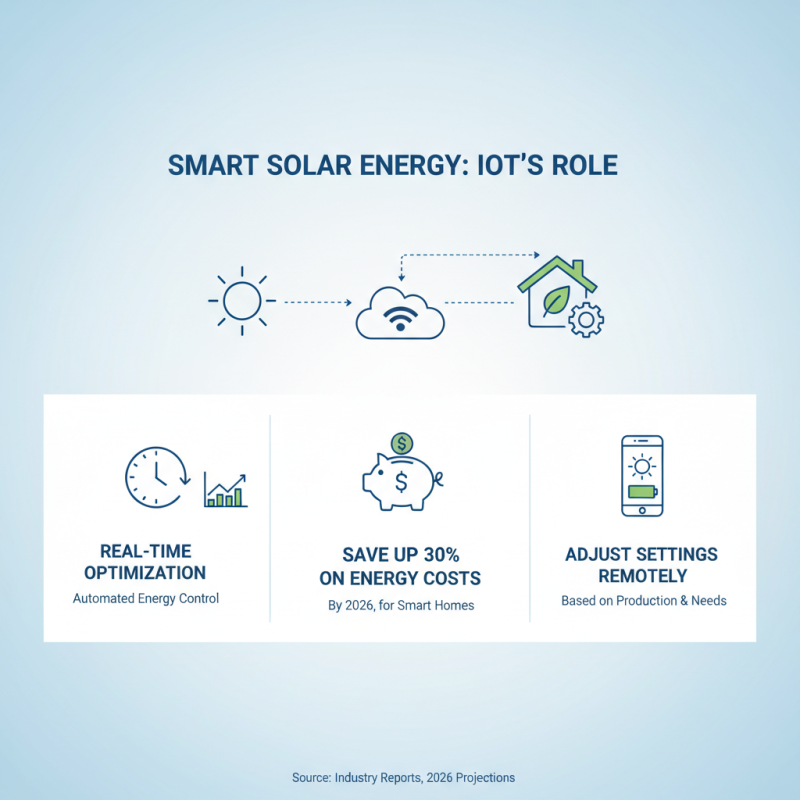
The role of the Internet of Things (IoT) in solar energy management is becoming increasingly vital. Reports suggest that by 2026, smart homes utilizing IoT can reduce energy costs by up to 30%. These systems optimize energy use in real-time through automated controls. This means homeowners can adjust settings based on current solar production and consumption needs.
Integration of smart devices allows for better monitoring and predictive maintenance. Studies show that devices equipped with IoT capabilities can enhance the lifespan of solar panels by up to 25%. However, this technology is not foolproof. Cybersecurity risks are a major concern, as data breaches can threaten energy management systems. This aspect needs improving for wider adoption.
Moreover, while many homeowners appreciate these innovations, they may lack awareness of their potential. The disconnect between technology and user education creates challenges. Understanding the full benefits requires effort. Still, the future looks promising, as advancements continue to emerge. Each innovation brings us a step closer to sustainable living, even amidst ongoing challenges.
Government Policies and Incentives Driving Solar Innovations for Sustainability
Government policies play a crucial role in advancing solar energy innovations. Many countries are introducing incentives to encourage the adoption of solar technologies. Tax credits and rebates reduce initial costs for homeowners. Grants and funding support research in solar innovation. These efforts make sustainable energy more accessible.
Despite progress, challenges remain. Some policies lack clarity or are inconsistent, leading to confusion among consumers. Local governments may not always align with national goals, which can hinder the full potential of solar energy. Additionally, not all communities benefit equally from these incentives, raising concerns about equity. More outreach is needed, especially in underserved areas.
Innovation is a dynamic process, influenced by policies that need constant evaluation. Continuous dialogue among stakeholders can enhance policies. Engaging communities ensures that everyone has a voice in the energy transition. The road ahead may be complicated, but the potential for sustainable living through solar energy is bright.